


Most people who say they cannot afford to travel are not wrong about the money. They are wrong about where it goes. A flight booked on the wrong day, an airport car rental counter, a hotel room when a hostel would have done, roaming charges, a taxi fare agreed after the meter started: these are the leaks, and every one of them has a tool that plugs it.
This guide covers the resources worth having bookmarked before your next trip, grouped by the problem each one solves. Flights, accommodation, activities, mobile data, intercity transport, car and bike rental, luggage storage, and insurance. Not all of them will apply to your trip. Pick the three or four that match how you actually travel.
This article contains affiliate links. If you book through them we may earn a small commission at no extra cost to you.
Also read:
- Top 7 Day Tour Comparison Websites For Your Travel Activities
- 10 Best Free Travel Planner Apps and Websites
- Best eSIM Providers for Seamless Global Travel

Flights
Flights are usually the single largest line in a trip budget, and also the one where the same seat can cost wildly different amounts depending on when you look and where you book. None of these three sells you a ticket directly. They find the fare, then hand you to the airline or agent, which is exactly what you want.
Skyscanner

(Source: Skyscanner Facebook)
Skyscanner is the first place to look, and often the last. It compares fares across airlines and online agents, and its two flexible search modes are what make it a budget tool rather than just a search box.
Set the date to Whole Month and it shows a calendar of prices, so you can see that leaving on a Tuesday saves you a hundred euros. Set the destination to Everywhere and it ranks entire countries by how cheap it is to reach them from your airport. If your dates are firm but your destination is not, that second mode alone can decide your trip.
Highlights
- Whole Month view: see a full calendar of fares instead of one date at a time.
- Everywhere search: find the cheapest country to fly to when you have no fixed destination.
- Price alerts: get notified when the fare on a route you are watching moves.
- Hotels and car hire in the same search, useful for a quick sanity check on prices you have seen elsewhere.
Worth knowing: Skyscanner sends you to a third party to complete the booking, and the quality of those agents varies. If the cheapest result is a name you do not recognise, check its reviews before paying, or book the same fare directly with the airline for a few euros more.
Kiwi.com
Kiwi.com does something the airlines will not do for you: it stitches together flights from carriers that have no agreement with each other. Fly a budget airline into one city, walk across the terminal, take a second unrelated airline onward. Airlines do not sell that as one ticket. Kiwi does.
On long or awkward routes this can undercut a conventional itinerary substantially. Its Nomad tool is the other reason to keep it bookmarked: give it a list of cities you want to visit and no fixed order, and it works out the cheapest sequence.
Highlights
- Self-transfer itineraries that combine airlines with no interline agreement.
- Nomad: enter several destinations and let it order them by total cost.
- Flexible date and radius search, including nearby airports you might not have considered.
- Strong on European budget carriers that often sit outside conventional agent inventory.
Worth knowing: a self-transfer means you collect your bag and check in again, and a missed connection is not the airline’s problem. Kiwi sells its own guarantee to cover that, and it is worth the cost on a tight connection. Read the layover time before you book, not after.
Aviasales

Aviasales is worth running as a third search rather than a first one. It draws on a different mix of agents and carriers than Skyscanner, so on some routes it surfaces a fare the others miss. It sells nothing itself; it finds the offer and redirects you to the seller.
Its two useful views are the price calendar, for when you have no fixed departure date, and the price map, for when you have no fixed destination. Between them you can go from “sometime next month, somewhere warm” to a specific bookable fare in a couple of minutes.
Highlights
- Price calendar: cheapest departure days across a month.
- Price map: destinations plotted by fare from your home airport.
- Broad agent coverage, including sellers that do not appear on the better-known engines.
- Clean mobile app, quick to re-run a saved search.
Worth knowing: because the booking happens on the seller’s site, support after purchase comes from that seller and not from Aviasales. Note who you actually bought from.
Accommodation
Accommodation is where a budget quietly doubles. The fix is not always “find a cheaper hotel”; often it is choosing a different kind of stay. A hostel private room, a serviced apartment with a kitchen, or a room booked with free cancellation so a changed plan does not cost you a night.
Agoda
Agoda earns its place through Asia. Across Southeast Asia, Japan and Korea its inventory runs deeper into small guesthouses and local properties than the Western-first platforms, and its prices are frequently a little lower on the same room.
It also leans hard on app-only and member rates. If you are booking anything in Asia, comparing Agoda against one other platform is a two-minute habit that pays for itself.
Highlights
- Deepest inventory in Asia, including properties that never list elsewhere.
- App-only and member pricing that is often below the public rate.
- Everything from hostel dorms to resorts in one search, filterable by price and location.
- Guest reviews detailed enough to judge a property you have never heard of.
Worth knowing: check whether the headline price includes local taxes and service charges before you compare it against another site. Agoda sometimes displays them separately, which makes a room look cheaper than it is.
Booking.com

Booking.com and Agoda are both part of Booking Holdings, so the overlap is real. What Booking does better for a budget traveller is free cancellation. Filter for it and you can hold a room at today’s price while your plans firm up, then rebook if something cheaper appears.
That flexibility is worth money on a longer trip, where itineraries change more than you expect. Its coverage outside Asia is also stronger than Agoda’s, particularly in Europe and Latin America.
Highlights
- Large free-cancellation inventory, filterable as a search condition.
- Hostels, guesthouses, apartments and hotels in the same list.
- Review system granular enough to flag cleanliness and location problems in advance.
- Genius loyalty discounts that unlock after a small number of stays.
Worth knowing: “free cancellation” has a deadline, usually one to three days before check-in. Put that date in your calendar when you book, because nobody will remind you.
HostelWorld

The general booking sites list hostels. HostelWorld understands them. It filters on the things that actually decide whether a hostel is bearable: dorm size, female-only rooms, lockers, curfew, whether there is a kitchen, and the social atmosphere.
Two points people miss. Hostels sell private rooms too, often for less than a budget hotel in the same neighbourhood and with a kitchen you can cook in. And for a group of three or four, a whole dorm booked out can cost less than two hotel rooms.
Highlights
- Hostel-specific filters: dorm size, female-only, kitchen, lockers, curfew.
- Private rooms in hostels, frequently cheaper than an equivalent budget hotel.
- Reviews written by people who care about the same things you do.
- In-app chat and meetups, which matter if you are travelling alone.
Worth knowing: a very cheap dorm bed in an expensive city is usually cheap for a reason. Read the most recent reviews rather than the average score, and check the location on a map before booking.
Airbnb

Airbnb is not automatically cheaper than a hotel, and on a two-night city break it usually is not once cleaning fees are added. Where it wins is length and group size. Past about five nights, and for three or more people, a whole apartment with a kitchen and a washing machine changes the maths.
The kitchen is the real saving. Breakfast and a couple of dinners cooked at home over a week is money that never reaches a restaurant. Many hosts also offer weekly and monthly discounts that are not obvious until you extend the dates.
Highlights
- Whole apartments with kitchen and laundry, which cut food and laundry costs.
- Weekly and monthly discounts that often appear only when you lengthen the stay.
- Strong value for groups, where one place beats several hotel rooms.
- Hosts as a local resource for transport, food and practical logistics.
Worth knowing: always read the total at checkout, not the nightly rate. Cleaning and service fees are fixed, so they hurt short stays disproportionately and barely register on long ones.
Tours, Tickets and Activities
Here is the thing about activities: the same Ha Long Bay cruise, the same Colosseum skip-the-line ticket, the same Barcelona tapas walk is sold by five or six platforms at five or six different prices. Nobody checks all of them. That is the leak, and it is the easiest one in this guide to fix.
TourTeller
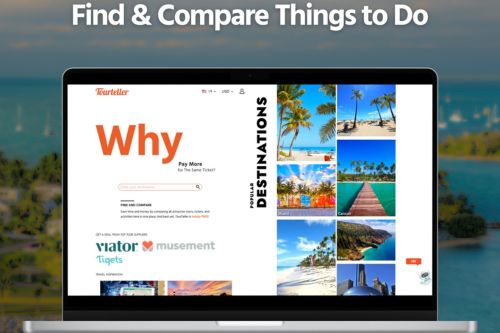
TourTeller is a meta-search engine for tours and activities. Search once, see the same experience listed across every major booking platform side by side, and book through whichever comes out cheapest. It is the same idea as Skyscanner, applied to things to do rather than flights.
The practical difference is that you stop guessing. Rather than opening four tabs and comparing by hand, or opening one and hoping, you see the spread in a single view, with ratings and review counts next to the price so the cheapest option is not the only signal you are working from.
Highlights
- Cross-platform price comparison: the same tour from multiple booking sites in one view.
- Reviews in context: ratings and review counts shown beside the price, not buried.
- Wide inventory: tours, attraction tickets, day trips and transfers across thousands of destinations.
- No account needed: search and compare, then book on the provider’s own site.
Viator

Viator has the largest catalogue of the mainstream platforms, which matters less for price than for choice. On a popular route you will often find eight versions of the same tour at different group sizes and durations, and the small-group or self-guided version is usually the cheaper one.
Reserve now, pay later is the budget feature worth using. It locks a place without taking your money, and most listings allow free cancellation up to 24 hours before.
Highlights
- Very large catalogue, so the same experience appears at several price points.
- Reserve now, pay later on many listings.
- Free cancellation up to 24 hours before on most tours.
- Deep review volume, which makes the ratings meaningful on major attractions.
GetYourGuide

GetYourGuide is the strongest of the group in Europe, and its skip-the-line tickets to the big attractions are where it saves you something other than money. An hour not spent queuing at the Sagrada Familia or the Eiffel Tower is an hour you get back.
Mobile tickets are standard, so nothing needs printing, and the cancellation terms are clearly stated on the listing rather than hidden in a footer.
Highlights
- Best European coverage of the major platforms.
- Skip-the-line entry to landmark attractions.
- Reserve now, pay later plus free cancellation up to 24 hours before on most listings.
- Mobile tickets, scanned straight from the app.
Klook

Klook is Asia-first, and it carries a category the Western platforms mostly ignore: the boring practical stuff. Metro passes, airport express tickets, rail passes, cable cars, SIM cards and luggage transfers, all bookable in advance at a small discount.
On an Asia trip that adds up faster than any single tour discount. A three-day metro pass and an airport transfer booked here rather than at the counter is a quiet saving on day one.
Highlights
- Transport passes, airport transfers and rail passes alongside tours.
- Local operators across Asia that Western platforms never list.
- App-only member pricing and frequent bundle discounts.
- Mobile e-vouchers that scan cleanly at Asian attractions.
KKday

KKday is the one to check against Klook rather than instead of it. Taiwan-founded and strongest across East Asia, it regularly prices the same attraction ticket or day trip a little differently, and it carries operators Klook does not.
It also sells local SIM cards and rail passes, so it covers the same practical ground. Two minutes comparing the two is worth it on anything expensive.
Highlights
- Strong East Asia coverage, particularly Taiwan, Japan and Korea.
- Operators and tour variants that do not appear on Klook.
- Rail passes, transport tickets and SIM cards alongside experiences.
- Skip-the-line entry on many major attractions.
Fever

Fever is a different animal from the tour platforms. It lists what is on in a city this week: concerts, immersive exhibitions, night markets, candlelight sessions, pop-ups. Things locals go to, not things tour buses stop at.
For a budget traveller this is where the good cheap evening comes from. A ticketed local event is usually a fraction of a guided tour and gives you a better story. Coverage is city-based, so it is excellent in large cities and thin outside them.
Highlights
- What is actually on this week, rather than the permanent tourist offer.
- Concerts, exhibitions, food events and pop-ups in one feed.
- Often much cheaper than a guided tour for an evening out.
- Curated by city, so recommendations get better the longer you stay.
Worth knowing: Fever only covers large cities. Check whether your destination is on the list before you plan around it.
Mobile Data and eSIMs
Roaming is the most avoidable expense in travel. A few days of carrier roaming can cost more than a month of local data, and almost every other tool in this guide stops working the moment you are offline. An eSIM is bought and installed from home in a few minutes and activates when you land.
Airalo

Airalo is where most travellers end up, and for good reason: the widest country coverage, regional plans that span a whole continent, and a setup that takes about five minutes. Choose the destination, pick a plan, install, done.
The regional plans are the budget play. If you are crossing several countries in Southeast Asia or Europe, one regional plan beats buying a separate local SIM at each border, both on price and on the hour you do not spend at an arrivals-hall counter.
Highlights
- Very broad country coverage, plus regional plans for multi-country trips.
- Install before you fly and activate on landing.
- No registration paperwork, unlike physical SIMs in many countries.
- Your home SIM stays active for calls and bank verification codes.
Worth knowing: an eSIM data plan does not give you a local phone number. That is fine for maps and ride-hailing, but apps that require local SMS verification will not work.
Jetpac

Jetpac competes with Airalo on price and adds one thing nobody else bundles: airport lounge access when your flight is delayed. If you fly often on budget carriers, where delays are part of the deal, that is a genuine perk rather than a marketing line.
Plans come in single-country, regional and global flavours, and the global option is unusually cheap for light data users who mainly need maps and messaging.
Highlights
- Lounge access on delayed flights, included with the plan.
- Competitively priced global plans for light data use.
- Single-country, regional and worldwide options.
- Straightforward app-based install and top-up.
Worth knowing: device compatibility is narrower than Airalo’s and coverage has gaps. Check both against your phone and your destination before buying.
ByteSIM

ByteSIM is the option to look at if you actually use a lot of data. Where Airalo and Jetpac sell you a bucket of gigabytes, ByteSIM offers unlimited plans in many regions, which suits anyone hotspotting a laptop or uploading video from the road.
Activation is a QR code from your confirmation email. Booking through TourTeller gets you 5 percent off.
Highlights
- Unlimited data plans, unusual among travel eSIMs.
- Suited to heavy use: tethering, remote work, video uploads.
- QR-code activation with no app required.
- 5 percent discount via TourTeller.
Worth knowing: check the supported-device list before buying, and read what “unlimited” means on your chosen plan. Speeds are often reduced after a daily threshold.
Intercity Transport
Buses, trains and ferries are the cheapest way to cross a country, and the hardest to book from abroad. Most local operators have no English website and take no foreign cards. These two platforms exist to solve exactly that, and they split the world neatly between them.
12Go

12Go is the answer for Asia. Sleeper buses, trains, ferries, minivans and private transfers from thousands of small operators, aggregated into one search with one checkout that accepts a foreign card.
It comes into its own on the routes that catch people out: Bangkok to Koh Samui, Hanoi to Sapa, Ho Chi Minh City to Mui Ne, the ferries to Phu Quoc. Booking these on arrival means paying whatever the counter asks. Booking in advance means knowing the price before you leave home.
Highlights
- Buses, trains, ferries, minivans and private transfers in one search.
- Pay by foreign card from home, which most local operators cannot accept.
- Operator reviews, so you can avoid the sleeper bus everyone complains about.
- Cross-border routes into Laos, Cambodia and Malaysia.
Worth knowing: 12Go is not always the cheapest way to buy a ticket, because it adds a booking fee on top of the operator fare. What you are paying for is being able to book at all from another country, and knowing the seat exists.
Omio

Omio does for Europe what 12Go does for Asia, and covers the UK, the US and Canada too. It puts trains, coaches and short-haul flights on the same results page, which is the only honest way to compare them: the cheap flight often loses once you add two airport transfers.
European rail rewards booking early far more than most people realise. The same seat can triple in price in the final fortnight, so a booking made three months out is the single biggest saving available on a European itinerary.
Highlights
- Trains, coaches and flights compared side by side on total journey time and price.
- Hundreds of European operators, including national rail companies.
- Mobile tickets and live journey updates.
- Also covers the UK, US and Canada, not just continental Europe.
Worth knowing: Omio charges a booking fee, and on a simple domestic journey the operator’s own site is sometimes cheaper. Use it to find the best option, then check that one operator directly before paying.
Car and Bike Rental
A rental car turns a trip inside out, and the airport counter is the most expensive way to get one. There are three different ways to rent, and which is cheapest depends less on the platform than on where you are and what you need.
QEEQ

QEEQ is the conventional route done well. It compares the big rental brands and hundreds of regional suppliers in one search, which is the reliable option when you want a known company, a proper counter at the airport and predictable insurance terms.
Its Price Drop Protector is the feature that matters here. Book early, and if the same car gets cheaper before pick-up, it rebooks you and refunds the difference. That removes the usual dilemma of booking early for availability versus waiting for a better price.
Highlights
- Major brands and regional suppliers compared in one search.
- Price Drop Protector: automatic rebooking and refund if the rate falls.
- Everything from economy hatchbacks to SUVs and minivans.
- Membership discounts on prepaid bookings.
Worth knowing: as with any rental aggregator, the headline price rarely includes the full insurance excess. Read what the included cover actually pays out before deciding whether to add more at the desk.
GetRentacar.com
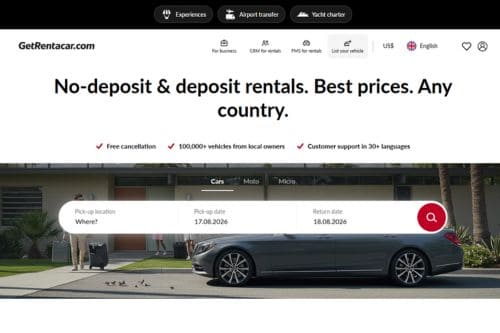
GetRentacar.com works on a different model, and it is the one to try when the big brands quote something absurd. Rather than aggregating corporate fleets, it connects you with local car owners and small independent rental firms who list their own vehicles and set their own terms.
You post a request with your dates, pickup area and requirements, and owners bid for it. Because those owners do not carry airport concession fees or corporate overheads, the offers that come back are frequently well under the counter rate for a comparable car. In some markets the listings extend to motorcycles and ATVs.
Highlights
- Rent directly from local owners and small firms rather than a corporate fleet.
- Request-and-bid system, so suppliers compete on your specific dates.
- Frequently below airport counter rates, especially where surcharges are high.
- Wide vehicle range, including motorcycles and ATVs in some countries.
Worth knowing: because each host sets their own conditions, deposit amounts, insurance cover and deductibles vary from listing to listing. Compare those terms as carefully as you compare the price, and read the host’s reviews.
BikesBooking.com
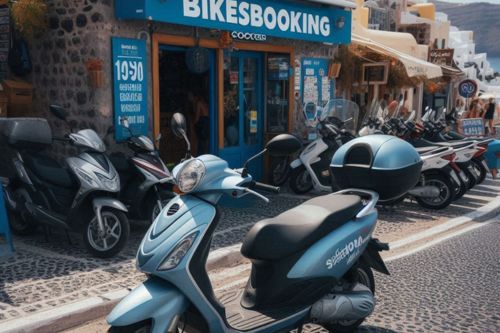
In much of Southeast Asia and southern Europe, two wheels beat four on both cost and practicality. BikesBooking.com aggregates scooter, motorbike, bicycle and ATV rental across dozens of countries, with prices and terms visible before you arrive.
The advantage over renting from a shop on the street is not only price. You get written terms, a comparable deposit, and a booking that exists in writing, which is worth a great deal if there is a dispute about a scratch on return.
Highlights
- Scooters, motorbikes, bicycles and ATVs across dozens of countries.
- Prices, deposits and rental terms compared before you commit.
- Free cancellation on most bookings.
- A written booking rather than a verbal deal on the pavement.
Worth knowing: check whether your licence is valid for the engine size you are booking, and whether your travel insurance covers riding it. Many policies exclude motorbikes entirely, and a claim refused abroad is expensive.
Luggage Storage
This is the smallest category here and the one that saves the most awkwardness. An early flight, a late check-in, a day between hotels: rather than paying for a night you do not sleep in, or dragging a suitcase around a city, leave it somewhere for a few euros.
Radical Storage

Radical Storage partners with shops, cafes and hotels near stations and tourist areas, so there is usually somewhere within a few minutes’ walk of where you actually are. Pricing is a flat daily rate per bag with no size limit, which is simpler than a station locker that charges by dimensions.
Highlights
- Flat daily rate per bag, with no size or weight limit.
- Locations near main stations and central districts in hundreds of cities.
- Insurance cover included on stored bags.
- Book online, so you know the price and address before you set out.
Worth knowing: opening hours belong to the host business, not to Radical Storage. Check the closing time against your flight, because a shop that shuts at six is no help for a nine o’clock departure.
Bounce

Bounce runs the same model with a denser network in North America, and it prices small items differently, so a backpack or a camera bag costs less than a full suitcase. Free cancellation any time before drop-off makes it safe to book speculatively.
Highlights
- Dense network, particularly strong in North American cities.
- Lower rate for small bags rather than one price for everything.
- Free cancellation any time before drop-off.
- No size limit on standard luggage.
Worth knowing: Bounce charges by the day, not by the hour, so a four-hour drop costs the same as a full day. For a short gap, compare it against a station locker.
Stasher
Stasher leans towards hotels rather than corner shops as storage points, which usually means longer opening hours and a staffed desk. If your bag needs to be collected late in the evening, that difference matters. Cover against loss, theft and damage is included, and cancellation is free.
Highlights
- Mostly hotel-based, so longer hours and a staffed reception.
- No size or weight restrictions.
- Insurance against loss, theft and damage included.
- Free cancellation with a money-back guarantee.
Worth knowing: the included cover has a ceiling and cash is excluded. Do not store a laptop or a passport here without checking the limit first.
Travel Insurance
Insurance is the one item on this list where being cheap can cost you everything you saved elsewhere. One hospital admission abroad can exceed the entire budget of the trip. Buy it, buy it before you leave, and read what it excludes rather than what it advertises.
Faye
Faye is built around the part of insurance everybody dreads, which is claiming. Approved claims are reimbursed to a digital wallet in the app rather than by a cheque six weeks later, and its cover extends to the small annoyances most policies ignore: delayed baggage, a lost passport, a cancelled connection.
Optional add-ons cover rental cars, pets left at home, adventure sports and cancel-for-any-reason. Build only what you need rather than buying a premium tier for one feature.
Highlights
- App-based claims with reimbursement to a digital wallet.
- Covers delayed baggage, lost documents and trip interruption as standard.
- Modular add-ons, including adventure sports and cancel for any reason.
- Telemedicine access and 24/7 support while you are away.
Worth knowing: availability depends on your country of residence. Check that Faye covers residents of your country before you build a quote.
Insubuy

Insubuy is a marketplace rather than an insurer, which is what you want when your situation is unusual. Visa-specific policies, student cover, Schengen requirements, visitors to the US: these are the cases where a general travel policy quietly does not qualify.
Policies are laid out side by side so you can compare the deductible and the medical maximum, which are the two numbers that decide whether a policy is any use.
Highlights
- Multiple insurers compared on deductible, medical maximum and exclusions.
- Visa-specific policies, including Schengen and US visitor requirements.
- Student and long-stay cover, not only short holidays.
- Policy documents accessible in an online account.
VisitorsCoverage

VisitorsCoverage is the third quote to get, and it is strongest on travel medical cover specifically, as distinct from trip-cancellation cover. If your main worry is a hospital bill rather than a lost deposit, start here.
It also handles the awkward categories properly: multi-trip annual policies, cruises and business travel, each of which a standard single-trip policy tends to exclude.
Highlights
- Focused on travel medical cover, not just trip cancellation.
- Multi-trip, cruise and business travel policies.
- Side-by-side comparison with the exclusions shown, not buried.
- Quotes built from your trip length, destination and traveller ages.
Worth knowing: with any of these three, the pre-existing condition clause is the one to read first. It is where most refused claims come from.
Final Thoughts
You do not need all of these. Most trips are covered by four: a flight search, an accommodation site, an eSIM, and whichever transport platform matches the region you are going to. Add insurance, which is not optional, and you have the whole thing.
The habit that saves the most is smaller than any single tool. Before you book anything that costs real money, check it in one other place. A second search takes two minutes and it is the closest thing to a free lunch in travel.