

Hanoi and Ho Chi Minh City sit at opposite ends of Vietnam, 1,726 kilometres apart. Getting between them is one of the first logistics problems most Vietnam itineraries run into, and the honest answer is simpler than most guides admit.
If you only need to get from one city to the other, fly. A domestic ticket often costs less than a sleeper train berth and takes two hours instead of thirty-three. The train, the bus, the car and the motorbike are worth choosing for a different reason: they let you stop in Hue, Da Nang, Hoi An and Nha Trang on the way, and they turn the transit into part of the trip.
This guide covers all five options with current prices and journey times, plus the licence rules that changed in 2025 and now catch out a lot of visitors who plan to drive.
This article contains affiliate links. If you book through them we may earn a small commission at no extra cost to you. Prices are converted at roughly 26,200 VND to the US dollar and will move with the exchange rate and the season.
Read also:
- Getting to and from Noi Bai (Hanoi) Airport to the city center
- Getting to and from Tan Son Nhat (Ho Chi Minh) airport to the city center
- 32 Best Apps For Your Vietnam Travel
- Ultimate Vietnam Travel Guide for Hanoi, Ho Chi Minh, Da Nang
- The five options at a glance
- The distance, and why it shapes everything
- 1. Flights: the default choice
- 2. The train: the Reunification Express
- 3. Sleeper buses: cheapest, in segments
- Before you drive anything in Vietnam
- 4. Car with a driver: the comfortable road trip
- 5. Motorbike: the one people remember
- Where to break the journey
- So which should you choose?

The five options at a glance
| How | Time | Typical cost | Best for |
| Flight | 2 hr 20 min | $35 to $85 one way | Anyone who just needs to be there |
| Train, soft sleeper | 33 to 35 hr | $65 to $90 | Making the journey part of the trip |
| Sleeper bus | 35 hr or more | $28 to $50 | The tightest budgets, in segments |
| Car with driver | 4 days and up | $45 to $80 per day | Groups, families, stopping at will |
| Motorbike | 2 to 4 weeks | $6 to $20 per day plus fuel | Experienced riders with a valid permit |
Read those numbers together and the picture is clear. A flight is cheaper than a sleeper berth and roughly fifteen times faster. Nobody should take a bus for 35 hours to save money on this particular route, because there is no money to save. What the slow options buy you is the country in between.
The distance, and why it shapes everything
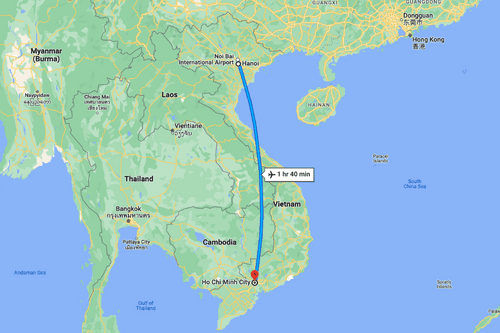
Hanoi is in the far north, on the Red River. Ho Chi Minh City, still widely called Saigon, is in the south near the Mekong Delta. The rail line between them runs 1,726 kilometres (1,072 miles); the road is a similar length, following the coast for most of it.
Vietnam is long and narrow, so almost everything worth seeing sits somewhere along that line. Hue with its imperial citadel, Da Nang, Hoi An just south of it, the beaches at Nha Trang, and the Hai Van Pass between Hue and Da Nang, which is one of the finest stretches of coastal road in Southeast Asia.
That geography is why the overland options make sense at all. You are not choosing between five ways to cover the same distance. You are choosing between skipping the middle of the country and travelling through it.
1. Flights: the default choice

- Time: about 2 hours 20 minutes in the air
- Cost: roughly $35 to $85 one way, higher at Tet and on public holidays
- Route: Noi Bai (HAN), about 30 km north of central Hanoi, to Tan Son Nhat (SGN), around 7 km from central Saigon
Hanoi to Saigon is one of the busiest domestic air corridors in the world, and the competition shows in the fares. Book a few weeks out and you will usually pay less than a soft sleeper berth on the train.
Five carriers fly the route as of 2026, which is two more than a couple of years ago. Vietnam Airlines is the full-service national carrier and runs the most frequencies by a wide margin. VietJet is the large low-cost operator and is close behind on frequency. Vietravel Airlines and Sun PhuQuoc Airways are the newer entrants, and Vietravel in particular tends to sit at the bottom of the fare table. Bamboo Airways still operates the route but has shrunk considerably and now flies it only a handful of times a week, so treat it as an occasional option rather than a mainstay.
Compare across all of them at once rather than checking airline sites individually. Skyscanner and Aviasales both cover the Vietnamese domestic carriers, and their whole-month views are the quickest way to spot the cheap departure days.
Worth knowing before you book
- The headline fare on the low-cost carriers excludes checked baggage and food. Add a 20 kg bag and the gap to Vietnam Airlines often closes.
- Add the ground transfers to the real journey time. Noi Bai is 30 km out, so door to door is closer to five hours than to two.
- Low-cost schedules move. If the flight feeds a connection or a tour the next morning, build in a buffer.
- Fares roughly double around Tet, and seats disappear weeks ahead. Book early or travel outside the holiday.
2. The train: the Reunification Express
- Time: 32 to 37 hours end to end, most services 33 to 35
- Cost: about $12 in a hard seat up to $90 for a lower bunk in a soft sleeper
- Route: Hanoi Railway Station to Saigon Railway Station, 1,726 km
There is no train actually called the Reunification Express. The name covers every service on the North-South line, run by Vietnam Railways as trains SE1 to SE8. Odd numbers head south, even numbers head north, and four or five direct services leave each day.
Very few travellers ride the whole thing in one go, and there is no reason to. The sensible approach is two or three overnight legs with days in Hue, Da Nang or Nha Trang in between. Each leg is bookable separately, and the per-night cost of a berth is close to what you would pay for a budget hotel room you are not using.
The four classes, and which to pick
- Hard seat. Wooden or thinly padded benches in an open carriage, from around 300,000 VND ($12) for the full route. Fine for two or three hours. Miserable for thirty.
- Soft seat. Reclining airline-style seats, air conditioned, roughly 400,000 to 700,000 VND ($16 to $28) on longer runs. Reasonable for a daytime leg of four to eight hours.
- Hard sleeper. Six berths per compartment, air conditioned, thin mattresses. The value option for an overnight leg. Take a lower or middle bunk if you can; the top one is a climb and has the least headroom.
- Soft sleeper. Four berths, proper mattresses, a door that closes. From about 1,600,000 VND ($65) for the full journey, and up to $90 for the lower bunks that everyone wants. This is what most visitors should book.
Trains SE1 and SE2 also carry a handful of two-berth VIP compartments, roughly four per train, plus privately operated Livitrans tourist sleepers on the Hanoi to Hue and Da Nang legs. Both cost noticeably more and both sell out first.
Booking normally opens 60 days ahead, stretching to 90 before Tet. You can buy directly from Vietnam Railways or through 12Go, which is usually easier from abroad because it takes foreign cards and shows the seat map in English.
What the ride is actually like
- The line hugs the coast rather than crossing the highlands, so expect sea views and rice fields rather than mountains and jungle.
- Newer carriages have USB sockets in the sleeper compartments. Older ones do not, so bring a power bank.
- There is a restaurant car and set meals delivered to the compartment, plus snack trolleys and hot water for instant noodles and coffee. Bringing your own food is normal and cheaper.
- Air conditioning runs cold overnight. Long trousers, a light layer and a scarf make the difference.
- Luggage allowance is a generous 20 kg per person and bags are rarely weighed.
- In the rainy season, roughly May to October, landslides and track work in central Vietnam cause delays, and typhoons in September and October can suspend services for days.
3. Sleeper buses: cheapest, in segments
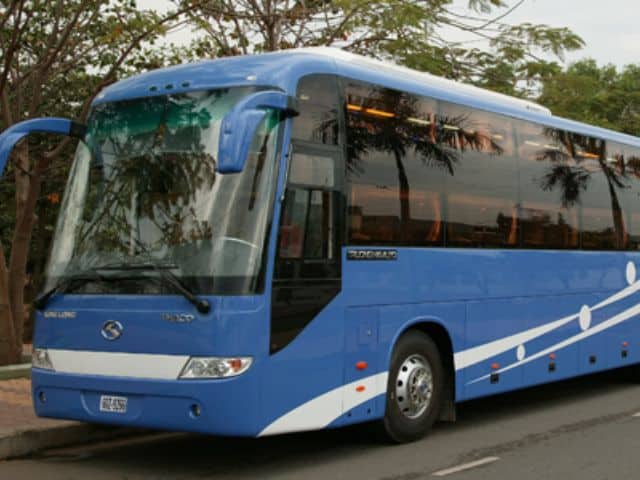
- Time: 35 hours or more end to end, longer with traffic
- Cost: about 830,000 to 1,300,000 VND ($28 to $50) for the full run, up to 1,800,000 VND ($68) for a premium cabin berth
- Route: mostly National Highway 1, with rest stops every few hours
Vietnamese sleeper buses are proper flat berths, not reclining seats, arranged in two levels with curtains and a shoes-off policy. On the right leg they are excellent value and genuinely comfortable.
Hanoi to Saigon is not the right leg. The end-to-end ticket is the most expensive single bus fare in the country, it takes longer than the train, and it costs about the same as a flight. Almost nobody does it in one sitting, and there is no good reason to.
Where the bus wins is on the individual hops: Hanoi to Hue in 12 to 14 hours, Hue to Hoi An, Hoi An to Nha Trang, Nha Trang to Saigon. Bought separately those legs are cheap, and an “open bus” ticket lets you break the route at any major stop, spend a few days, then continue.
Which operators to use
Operator quality varies more on this route than on any other form of transport in Vietnam, and long-haul overnight services are where the variation matters most. Stick to the established names at the mid-tier price point rather than the cheapest curbside ticket.
- FUTA, also branded Phuong Trang. The dominant operator across southern and central Vietnam, large fleet, decent safety record.
- The Sinh Tourist. Runs the classic backpacker corridor of Hanoi, Hue, Hoi An, Nha Trang and Saigon, with better-maintained buses aimed at foreign travellers.
- Mai Linh Express. The premium end, and the operator most likely to be running a cabin-berth bus on the long haul.
- Inter Bus Lines and Queen Cafe. Reliable on the northern legs if you are starting with Hanoi to Hue.
One warning worth taking seriously. There are copycat storefronts in the Hanoi Old Quarter trading on The Sinh Tourist name. Booking through a platform rather than a shopfront avoids the problem entirely, and 12Go lists the real operators with reviews and takes a foreign card.
Worth knowing before you board
- Berths suit passengers up to roughly 180 cm. If you are taller, pay the extra for a cabin berth, which costs about 1.4 to 2 times the standard fare.
- Rest stops fall at two or three in the morning and last 15 to 20 minutes. Buy snacks before you leave rather than relying on them.
- Buses often arrive at unhelpful hours. Check the scheduled arrival time and tell your accommodation, since many will hold a bag or arrange a pickup.
- Keep your passport, cash, phone and laptop in a small bag that stays with you in the berth, not in the hold.
- A ticket priced under about $8 for an overnight run with no reviews online is a warning sign rather than a bargain.
Before you drive anything in Vietnam
This section applies to both of the remaining options, and it changed in 2025. Read it before you decide to drive or ride.
Decree 168/2024 took effect on 1 January 2025 and raised traffic penalties sharply. Fines for driving or riding without a valid licence went up by roughly a factor of ten, checkpoints now verify foreigners far more often than they used to, and a vehicle can be impounded for a week or more if you cannot produce the right papers. On a rented bike that is worse than it sounds: you keep paying the shop’s daily rate while it sits in the compound, on top of the fine and the impound fee.
On the licence itself. Vietnam recognises International Driving Permits issued under the 1968 Vienna Convention, carried together with your original national licence. The older 1949-format permit is not accepted, and neither are the various privately sold “international licences” that turn up in search results.
The catch is that several countries do not issue the 1968 format at all, so their residents cannot obtain a permit that is valid here. Check with your own national motoring authority before you assume yours will work, and get the permit at home, because you cannot obtain one after you arrive. The permit must also be issued after your domestic licence, not before.
One more thing that catches people out: riding without a valid licence can void your travel insurance entirely. A hospital bill in Vietnam after an uninsured motorbike accident will cost more than the whole trip.
4. Car with a driver: the comfortable road trip
- Time: four days at a hard push, a week or more to enjoy it
- Cost: from about 1,100,000 VND ($45) a day with a driver, fuel and tolls included; $50 to $80 a day is more typical
- Self-drive: $35 to $60 a day for a compact, $60 to $100 for an SUV, plus airport surcharges
Hiring a car with a driver is the most flexible way to do this route and the least stressful. You stop where you want, the bags stay in the boot, and somebody who understands Vietnamese traffic is doing the difficult part. Split between three or four people it competes with the train.
Self-driving is a different proposition. It is legal with the right permit, but in practice most agencies will not rent to a non-resident foreigner, many insurance policies exclude non-resident drivers, and Vietnamese urban traffic is genuinely difficult for anyone who has not ridden in it. Inside Hanoi and Saigon, walk or use Grab. If you want to drive yourself, do it on the open coastal road between cities, not in them.
How to book it
For a multi-day trip with a driver, hotels and local tour desks in Hanoi will quote you a price, and it is worth getting two or three quotes because rates vary a lot. For self-drive, GetRentacar.com works differently from the big aggregators: you post your dates and requirements and local owners and small firms bid for the booking, which usually undercuts the airport counters. Deposit and insurance terms are set by each owner, so compare those as carefully as the price.
Worth knowing
- Fuel runs roughly 22,000 to 26,000 VND a litre, and on 1,700 km that is a real line in the budget.
- Inspect the car before you accept it and photograph any existing damage, whoever you rent from.
- If you hire a driver, agree in advance who pays for their meals and accommodation on a multi-day trip. Most quotes include it, but confirm.
- An English-speaking driver costs more than one without, and on a week-long trip it is worth the difference.
5. Motorbike: the one people remember
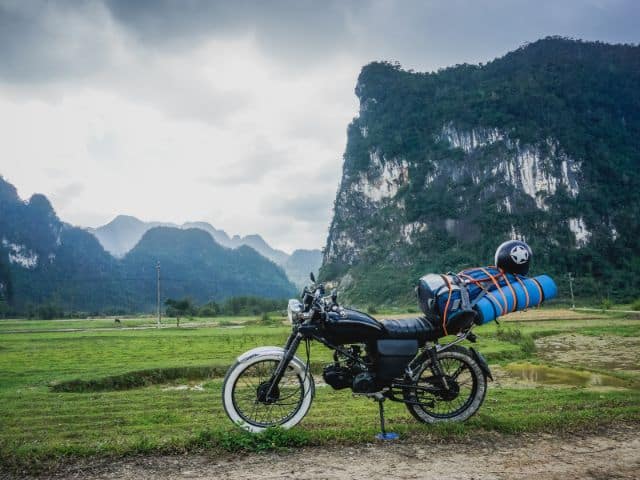
- Time: two to four weeks at a sane pace
- Cost: a scooter or semi-automatic from about 150,000 VND ($6) a day; a touring or trail bike 500,000 to 1,500,000 VND ($20 to $60) a day
- Requirement: a valid 1968-format International Driving Permit covering motorcycles, plus your national licence
Ridden well, this is the best way to see Vietnam and nothing else comes close. You pass through towns nobody stops in, eat where the truck drivers eat, and cross the Hai Van Pass with the sea on one side instead of watching it through a train window.
Ridden badly, it is the most dangerous thing in this article. Vietnam is not the country to learn on. If you have never ridden a motorbike in traffic before, choose one of the other four options; the roads here kill thousands of people a year and a foreign rider with no experience is a poor bet.
Renting versus buying
Buying a used bike in Hanoi and reselling it in Saigon is still traded as backpacker wisdom, but the registration paperwork rarely ends up in the buyer’s name, and since the 2025 enforcement changes that is a bigger liability than it used to be.
The cleaner route is a one-way rental. Several operators, Tigit Motorbikes among the better known, rent in Hanoi and take the bike back in Saigon, Da Nang or Dalat for a drop-off fee. You get a maintained bike, the registration documents to show at a checkpoint, and a phone number to call when something breaks. Deposits are typically several hundred dollars, refunded on return, and minimum rental periods of about five days apply on cross-country hires.
Two routes south
The coast. Hanoi, Ninh Binh, Phong Nha, Hue, Da Nang, Hoi An, Quang Ngai, Qui Nhon, Nha Trang, Mui Ne, Ho Chi Minh City. Easier riding, beaches, and the Hai Van Pass.
The highlands. Hanoi, Ninh Binh, Phong Nha, Hue, Da Nang, Hoi An, Kon Tum, Pleiku, Buon Ma Thuot, Dalat, Ho Chi Minh City. Cooler, quieter, more demanding, and far fewer tourists.
For detailed route notes, Vietnam Coracle is the standard reference and worth reading properly before you commit to a line on the map.
Riding tips
- Avoid National Highway 1 where you can. It carries the country’s freight and it is the least forgiving road in Vietnam.
- Wear a proper full-face helmet, not the plastic shell that comes with the rental. Buying one in Hanoi costs less than one night’s accommodation.
- Carry your permit, your licence, a passport copy and a copy of the bike’s registration so a routine checkpoint stays routine.
- Check that your travel insurance covers riding, and at what engine size. Many policies exclude motorbikes entirely.
- Sunscreen and long sleeves. You will be in the sun for six hours a day.
- Park in a guarded lot overnight and use the lock. Hotels almost always have somewhere.
Where to break the journey

If you take the train or the bus, these are the stops that justify the extra days. Each is a station or a bus stop on the main line, so you can break the journey and pick it up again.
- Ninh Binh, two hours from Hanoi. Limestone karst and rivers, the same landscape as Ha Long Bay without the boats.
- Phong Nha, for the cave systems. Off the rail line, reachable by bus from Hue or Hanoi.
- Hue, the imperial capital, roughly halfway. The citadel and the royal tombs need a full day.
- Da Nang, the obvious break point for the full route, and 30 km from Hoi An by taxi or minivan.
- Hoi An, the old trading port. No station of its own, so travel to Da Nang and transfer.
- Nha Trang, beaches and a short overnight leg from Saigon, which makes it a natural last stop.
A comfortable version of the whole thing looks like this: Hanoi, overnight train to Hue, two nights; Hue to Da Nang and a few days around Hoi An; overnight train to Nha Trang; overnight train to Saigon. Five legs, about ten days, and you will have seen most of the country rather than the inside of an airport.
So which should you choose?
Short on time, or you have already seen central Vietnam. Fly. It is cheaper than the train, it takes an afternoon, and there is nothing noble about spending 35 hours to arrive at the same place.
Two weeks or more, and the journey is the point. Take the train in two or three legs with stops in Hue, Hoi An and Nha Trang. Book soft sleepers, take the lower bunks, and accept that the timetable is a suggestion.
Travelling on very little. Buses on the individual legs, booked through a platform with reviews rather than at a shopfront. Do not attempt the end-to-end ticket; it is the worst value in this article.
Three or four of you, or travelling with children or a lot of luggage. A car with a driver. Split four ways it costs about what the train does and you stop wherever you feel like it.
You already ride, and you have a valid permit. The motorbike, on the highland route, with three or four weeks to do it properly. Nothing else in Southeast Asia is quite like it.
Whichever you pick, book the long-distance legs before you arrive rather than on the day. Sleeper berths and cheap flights both sell out, and the difference between planning a week ahead and turning up at the station is often the difference between the option you wanted and the one that was left.
Top things to do in Hanoi








Top things to do in Ho Chi Minh City