
Vietnam has fewer public holidays than most of its neighbours, but it clusters them. That combination catches travellers out: a country that looks relaxed on paper effectively shuts down for nine consecutive days in February and again for four or five days in late April and early September.
If you are planning a trip, there are only two dates you really need to memorise: Tet, and the 30 April to 1 May block. Everything else is a single day that barely disrupts a well-planned itinerary. Those two will double your transport costs and empty the restaurants if you get them wrong, or give you the most interesting week of your trip if you get them right.
Below are the confirmed 2026 dates, the 2027 dates as far as they are currently known, and what each holiday actually does to a traveller’s day.
Also read:
- 32 Best Apps For Your Vietnam Travel
- 20 Vietnam Bucket List Travel Ideas
- 18 Best Hiking and Trekking Destinations in Vietnam
- How To Get To Ho Chi Minh from Hanoi: Best 5 Ways
- Vietnam now has twelve public holiday days, not eleven
- Public holidays in Vietnam, 2026
- Public holidays in Vietnam, 2027
- New Year's Day, 1 January
- Tet, the Lunar New Year
- Hung Kings' Commemoration Day
- Reunification Day, 30 April
- International Labour Day, 1 May
- National Day, 2 September
- Vietnam Culture Day, 24 November
- How the compensatory days work
- Days that feel like holidays but are not
- So how should this change your plans?

Vietnam now has twelve public holiday days, not eleven
The 2019 Labour Code gave employees eleven paid public holiday days a year, spread across six occasions. That changed in 2026.
24 November is now Vietnam Culture Day (Ngay Van hoa Viet Nam), a paid public holiday. It comes from Politburo Resolution 80-NQ/TW of 7 January 2026 on cultural development, and the National Assembly approved the resolution designating the date in April 2026. That brings the total to twelve paid days across seven occasions.
One honest caveat on the legal status. The resolution establishes the holiday and the entitlement to a paid day off, but the amendment writing it into Article 112 of the Labour Code was still moving through the legislative programme as of mid 2026, expected at the second session of the 16th National Assembly. In practice the day off applies; the statutory text is catching up.
Two other things worth knowing before you read the tables.
- National Day is two days, not one. Since the 2019 Labour Code took effect, 2 September is paired with either 1 or 3 September. A lot of older guides still list it as a single day.
- The statutory list and the actual calendar are different things. Each year the government publishes an arrangement for public sector staff that stretches the statutory days into longer blocks using weekends and swapped workdays. That is why eleven or twelve legal days became 26 days off in 2026.
Private employers may set their own Tet and National Day arrangements provided employee entitlements are protected and the schedule is announced at least 30 days ahead. So hotel and tour staffing during Tet varies by company, and a booking confirmed with one operator tells you nothing about another.
Public holidays in Vietnam, 2026
| Holiday | Statutory date | Actual days off |
| New Year’s Day | 1 January (Thu) | 1 to 4 January, 4 days |
| Tet, Lunar New Year | 16 to 20 February | 14 to 22 February, 9 days |
| Hung Kings’ Commemoration Day | 26 April (Sun) | 25 to 27 April, 3 days |
| Reunification Day and Labour Day | 30 April, 1 May | 30 April to 3 May, 4 days |
| National Day | 1 to 2 September | 29 August to 2 September, 5 days |
| Vietnam Culture Day | 24 November (Tue) | 1 day |
Twelve statutory days, and 26 days off in total once rescheduled weekends are counted. Two details from the 2026 arrangement are worth calling out.
- Tet 2026 was the longest official Tet break on record, nine consecutive days set by Decision 1369/QD-LDTBXH, because the five statutory days landed neatly between two weekends.
- The rumoured nine-day April break did not happen. There was public discussion about swapping workdays to bridge Hung Kings’ Day and the 30 April block into one long run, and the Ministry of Home Affairs confirmed no such national policy. Some universities and companies made their own arrangements, which is why you may have read conflicting accounts.
Public holidays in Vietnam, 2027
| Holiday | Statutory date | Notes |
| New Year’s Day | 1 January (Fri) | Falls into the weekend |
| Tet, Lunar New Year | First day 6 February (Sat) | 5 statutory days; block length not yet announced |
| Hung Kings’ Commemoration Day | 16 April (Fri) | Falls into the weekend |
| Reunification Day and Labour Day | 30 April (Fri), 1 May (Sat) | Compensatory day likely for the Saturday |
| National Day | 2 September (Thu), plus one adjacent day | Paired day not yet confirmed |
| Vietnam Culture Day | 24 November (Wed) | 1 day |
Treat the 2027 column as statutory entitlements, not as a schedule. The dates above are what the Labour Code guarantees plus the lunar conversions for Tet and Hung Kings’ Day. The government publishes the actual arrangement for the following year, including the length of the Tet block and any swapped workdays, roughly between October and December of the preceding year. Until that announcement lands, nobody knows whether Tet 2027 runs seven days or nine.
If you are booking a February 2027 trip now, the safe assumption is that the period from about 4 to 14 February will be disrupted, and you should plan around the wider window rather than the narrow one.
New Year’s Day, 1 January
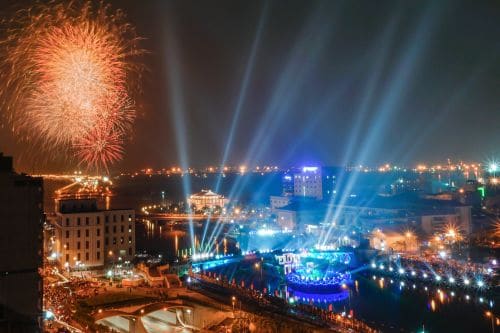
One statutory day, and the least disruptive holiday on the list. Government offices and banks close, most shops and restaurants do not.
The interesting part is the night before. Both big cities run countdown events and fireworks: in Hanoi the crowd concentrates around Hoan Kiem Lake and the surrounding streets of the Old Quarter, which are closed to traffic at weekends anyway. In Ho Chi Minh City it is Nguyen Hue walking street and the riverfront at Bach Dang Wharf.
Worth knowing: if you want a view of the fireworks without standing in the crush, a Saigon River dinner cruise is on the water where the display is aimed. These sell out for 31 December specifically, so book well ahead rather than on the day.
Do not confuse this with Tet. Vietnamese families do not treat 1 January as the important new year, and the atmosphere is closer to a normal night out with fireworks attached.
Tet, the Lunar New Year
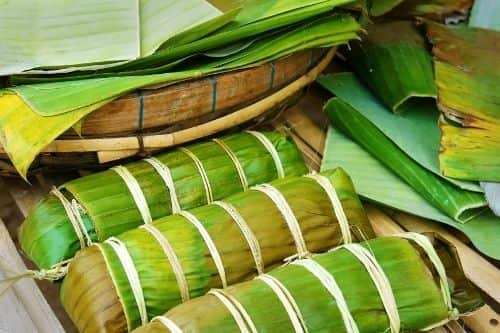
Tet Nguyen Dan is the only holiday on this list that will substantially reshape your trip. Five statutory days, stretched to seven or nine in practice, and a cultural weight that no other date comes close to.
- 2026: first day Tuesday 17 February, Year of the Horse (Binh Ngo). Lunar New Year’s Eve was Monday 16 February. Official break 14 to 22 February.
- 2027: first day Saturday 6 February, Year of the Goat (Dinh Mui). Eve on Friday 5 February. Block length to be announced.
The days are counted from the first, mung mot, and the three days from the eve through mung ba are the core of it. The wider festival season runs from Kitchen God Day, the 23rd day of the twelfth lunar month, to the first full moon of the new year, Tet Nguyen Tieu, which is about three weeks in total.
What actually closes
- Independent restaurants, family shops and local markets: closed for roughly the first three or four days, and in rural areas sometimes longer. This is the part that surprises people.
- Banks, government offices and embassies: fully closed across the block. Visa extensions and document replacement are impossible during this window, so do not schedule anything administrative.
- Museums and paid attractions: mixed. Many close for the central days and reopen partially.
- Open throughout: hotels and resorts, convenience stores, and the international chains in city centres, all on reduced hours.
- Transport: domestic flights, trains and buses sell out four to six weeks ahead at two to three times normal fares. This is the single biggest cost effect of the entire calendar.
Going anyway, which is a reasonable choice
Tet is the most interesting time of year to be in Vietnam if you accept the trade-off. Cities empty out and go quiet in a way they never otherwise do, flower markets take over whole streets in the week before, and the pagodas fill with families praying for the year ahead.
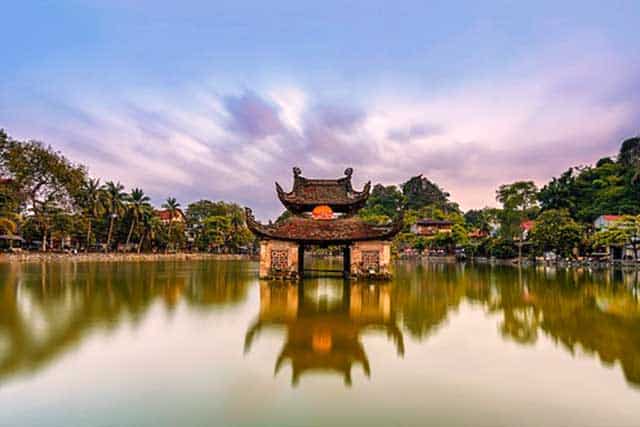
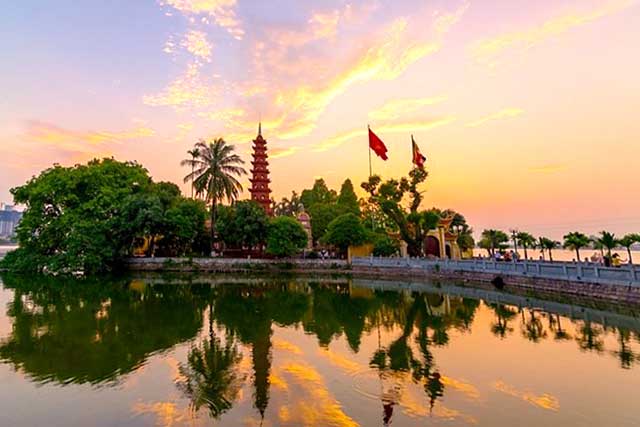
The temples are where to spend the first days. In Hanoi, Tran Quoc Pagoda on West Lake and the Temple of Literature, where students come to pray before exams, are both busy and worth it. In Ho Chi Minh City, Thien Hau Temple and the Jade Emperor Pagoda are the ones to see, and Cholon is the most decorated part of the city.
Worth knowing: book anything that involves a guide, a driver or a boat before you arrive, not on the day. Independent operators are with their families and the ones still working are the ones who committed in advance. A water puppet show in Hanoi or a cooking class in Saigon are both good answers to a day when the street food stalls are shut.
Hung Kings’ Commemoration Day
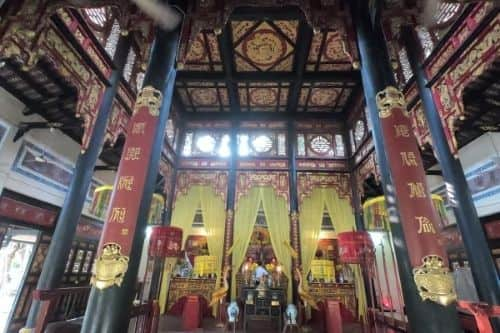
Gio To Hung Vuong honours the Hung Kings, the semi-legendary founders of the Vietnamese state, and falls on the tenth day of the third lunar month. It has been a public holiday since 2007. In 2026 it fell on Sunday 26 April, with a compensatory Monday; in 2027 it is Friday 16 April.
The national ceremony takes place at the Hung Kings Temple complex on Nghia Linh Mountain in Hy Cuong, Viet Tri, Phu Tho province, about 80 to 85 kilometres northwest of Hanoi. The pilgrimage climbs through three temple levels, the Lower, Middle and Upper temples, with the main state rite on the tenth day. Around it, Phu Tho runs a festival and culture week that in 2026 spanned 17 to 26 April.
Worth knowing: older articles place the temple in “Phong Chau district”. That district no longer exists. Vietnam abolished the entire district tier of local government on 1 July 2025 and merged provinces from 63 down to 34, and in the same round Phu Tho absorbed the former Vinh Phuc and Hoa Binh provinces. If you are searching for directions, use Phu Tho province and Viet Tri rather than the old district name.
For travellers this is a one-day holiday that barely registers unless you go to Phu Tho, in which case expect heavy traffic and traffic diversions on the approach roads. Simultaneous ceremonies happen at Hung Kings temples all over the country, so you can see the rituals without the drive. A Hanoi city tour or a day out to Ninh Binh is the easier use of the long weekend.
Reunification Day, 30 April
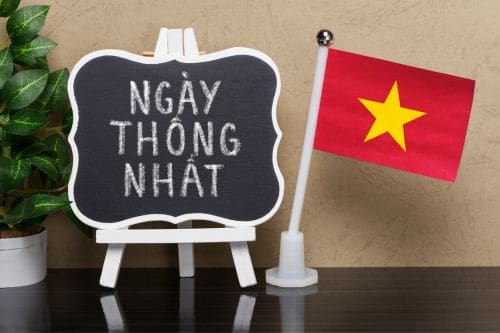
Also called Liberation Day or Victory Day, and it marks the capture of Saigon on 30 April 1975 and the end of the war. Schools and most businesses close, and domestic travel is heavy because it runs straight into Labour Day.
It is the best day of the year to engage with the history, and Ho Chi Minh City is where to do it. The Reunification Palace is the building whose gates the tanks came through, and the War Remnants Museum is the unflinching account. Outside the city, the Cu Chi Tunnels are the standard half day.
Worth knowing: the museum and the palace are both extremely busy on the day itself. Going with a guide on a War Remnants Museum tour makes a real difference to what you take from it, and skipping the ticket queue matters more on 30 April than on any other date. In Hanoi, Hoa Lo Prison is the equivalent stop.
International Labour Day, 1 May
One statutory day, and it matters mainly because of where it sits. Falling the day after Reunification Day, it turns a single holiday into a block of four or five, and that block is the second heaviest domestic travel period of the Vietnamese year after Tet.
Beaches are the problem. Occupancy at coastal resorts runs very high through this window and fares rise with it. If your dates are fixed and they overlap, the practical move is to go inland or somewhere that domestic tourism has not saturated.
- Instead of the standard beach run, Can Gio mangrove forest or Nam Cat Tien National Park from Ho Chi Minh City.
- From Hanoi, Ba Be Lake or the Cao Bang loop take you well away from the crowd.
- If you want the water anyway, Bai Tu Long Bay is the quieter neighbour of Ha Long Bay and worth the swap on a holiday weekend.
Tourism businesses generally stay open through this holiday, so the constraint is capacity and price rather than closure.
National Day, 2 September
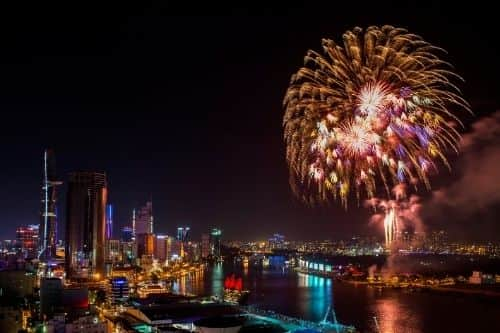
Vietnam’s Independence Day, marking Ho Chi Minh reading the Declaration of Independence at Ba Dinh Square in Hanoi on 2 September 1945. Two statutory days since the current Labour Code, and in 2026 it was extended into a five-day block from 29 August to 2 September using a swapped Saturday workday.
Hanoi is the place to be for this one. Ba Dinh Square hosts flag ceremonies and parades, and the surrounding sites are the ones tied to the date: the Ho Chi Minh Mausoleum and the One Pillar Pagoda beside it. Flags go up on every street in the country, which is worth seeing on its own.
Worth knowing: the mausoleum keeps limited hours and closes for maintenance periods, and around National Day the queues and security are at their heaviest. Check opening times for your exact date rather than assuming. A guided city tour handles the sequencing better than working it out at the gate.
Because the holiday now runs to two days and is regularly bridged into four or five, treat late August and the start of September as a domestic travel peak rather than an ordinary week.
Vietnam Culture Day, 24 November
The newest holiday on the calendar and the one nothing has been written about yet, because the first observance is recent. One paid day off, on a fixed date, aimed at widening public access to arts and heritage.
The resolution behind it also commits the state to spending at least 2 per cent of the budget on culture, with tax incentives for film production, exhibitions and heritage repatriation, and pilot “heritage urban area” schemes running to 2035. In other words the day sits inside a much larger cultural programme, and the public-facing side of it is likely to grow year on year rather than stay at one quiet day off.
What to expect as a traveller is genuinely unclear at this stage. A fixed-date single holiday in late November does not create a travel crush the way Tet does, and free museum days, performances and exhibition programming are the obvious form for it to take. Rather than guess, check what is scheduled locally when you arrive.
If you are in the country on the date, the museums and craft venues are the natural fit. The Vietnam Museum of Ethnology in Hanoi is the best single museum in the country for understanding its 54 ethnic groups. In Ho Chi Minh City, the Fito Museum of traditional medicine and the Golden Dragon Water Puppet Theater are both small and specific in a good way.
For something you make rather than look at, a Hanoi coffee workshop or a mosaic workshop in Saigon both fit the day.
How the compensatory days work
Two mechanisms turn a short statutory list into long blocks, and understanding them is the difference between reading a calendar correctly and being surprised at the airport.
- Compensatory days. When a public holiday falls on a Saturday or Sunday, employees get an additional day off on the following working day, so the paid entitlement is never lost to a weekend. Hung Kings’ Day landing on Sunday 26 April 2026 is why Monday 27 April was also off.
- Swapped workdays. For the big blocks, the government moves a working day onto a Saturday to bridge an awkward gap. National Day 2026 became five days because a Saturday in August was designated a workday in exchange for Monday 31 August.
The arrangement is published annually and applies to public sector staff. Private companies may follow it, adapt it, or set their own for Tet and National Day.
One note on sourcing. These schedules have historically been announced by the Ministry of Labour, Invalids and Social Affairs, and the Tet 2026 arrangement carries that ministry’s decision code. More recent reporting attributes the annual announcement to the Ministry of Home Affairs, following the restructuring of central government. Sources currently disagree on which ministry publishes it, so if you need the authoritative document rather than a summary, search for the decision number rather than the ministry name.
Days that feel like holidays but are not
Several dates are widely observed without being paid public holidays, and businesses stay open on all of them.
- Christmas, 25 December. Not a public holiday, but visibly celebrated in the cities, with decorations from late November and crowds outside the cathedrals on Christmas Eve. St Joseph’s Cathedral in Hanoi and Notre Dame Cathedral in Saigon are the focal points.
- Ho Chi Minh’s birthday, 19 May, and the founding of the Communist Party, 3 February. Marked officially, worked normally.
- Mid-Autumn Festival, the fifteenth day of the eighth lunar month. Not a day off, but one of the best times to be in the Old Quarter, and mooncakes appear weeks ahead.
- Tet Nguyen Tieu, the first full moon of the lunar year, about two weeks after Tet. Busy at the pagodas, not a day off.
So how should this change your plans?
If your dates are flexible, avoid two windows. The Tet block, roughly the week either side of the first lunar day, and 30 April to about 3 May. Those are the only two periods where the calendar meaningfully costs you money and access.
If your dates are fixed and they land on Tet, commit properly. Book flights, trains and any guided activity six weeks out, stay in one or two bases rather than moving every second day, and accept that you will eat in hotels and chains for three days. In exchange you get the quietest cities and the most interesting street life of the year.
If they land on the 30 April block, go inland. The coast is where domestic tourism concentrates. National parks, the northern mountains and the Mekong are all substantially easier in the same week.
The single-day holidays need no planning at all. New Year’s Day, Hung Kings’ Day, National Day and Culture Day will close a bank and fill a temple. None of them will break an itinerary.
And whichever week you land in, book the long-distance legs before you arrive rather than on the day. In Vietnam the difference between planning a fortnight ahead and turning up at the station is usually the difference between the option you wanted and the one that was left.